Key takeaways
Directory submission is structured distribution, not just backlink collection.
Relevance and listing quality matter more than raw submission count.
The best campaigns create referral paths, citations, and category context.
Tracking outcomes makes the campaign auditable and reusable.
Directory submission is a distribution layer
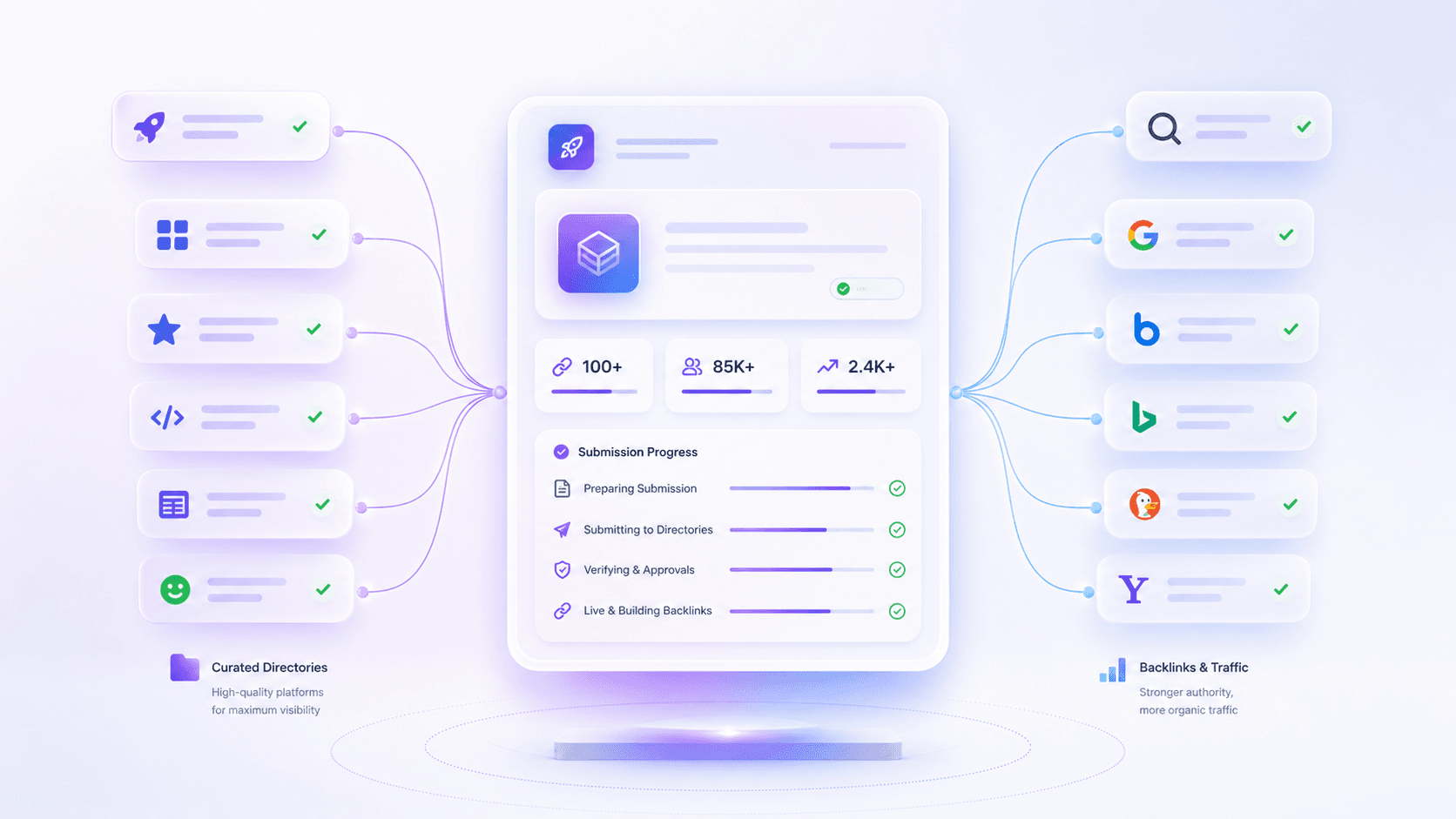
Directory submission means placing your product on websites where people browse tools by category, use case, launch timing, or niche. For software products, that can include AI tool catalogs, SaaS directories, developer tool lists, launch platforms, startup communities, and resource pages.
The old view of directory submission treated it as a mechanical SEO tactic. The modern view is broader. A good listing can create a referral path, a public citation, a category association, a backlink, and a small credibility signal. The value depends on where the listing appears and how well it explains the product.
A listing is a small landing page
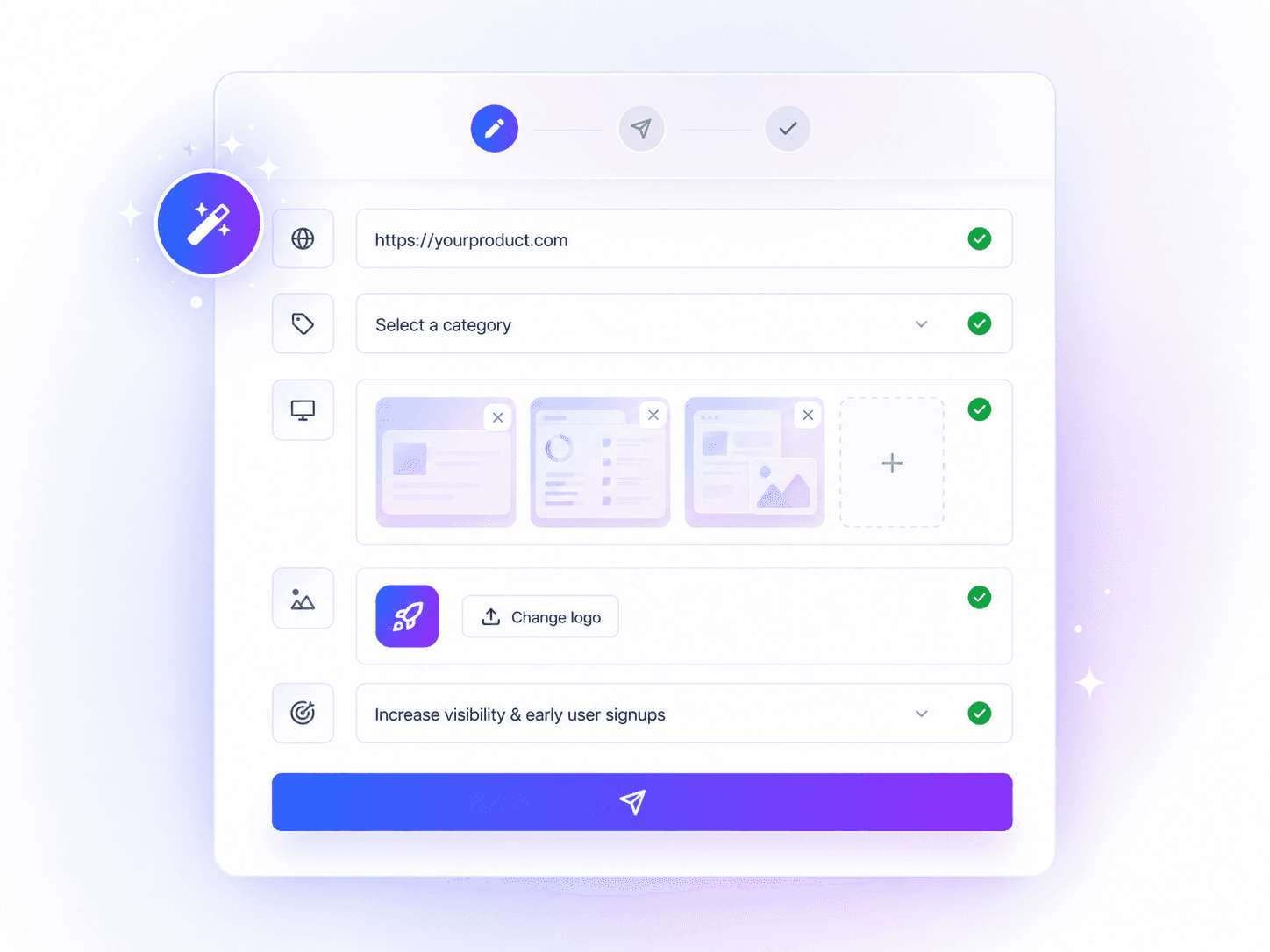
Founders often treat directory forms as chores. Users treat directory listings as evidence. If someone discovers your product through a directory, the listing may shape their first impression before they click your homepage. That means the copy, screenshots, pricing notes, and category choices matter.
A strong listing explains who the product is for, what problem it solves, and why it is credible. It does not try to say everything. It gives enough context for the visitor to decide whether to click. If the listing is vague, misplaced, or missing assets, it can reduce trust instead of building it.
Backlinks are useful but incomplete
Backlinks are one reason founders submit to directories, especially when the directory offers dofollow links. But the backlink is not the only value. Nofollow listings can still send referral traffic, help users discover the product, and create public mentions that reinforce brand and category context.
This matters because search and AI discovery are influenced by distributed information. When a product is described consistently across credible pages, it becomes easier for people and machines to understand what it does. Directory listings should therefore be accurate and specific, not just numerous.
Quality beats raw volume
Submitting to every directory on the internet is not a strategy. Some directories are abandoned, irrelevant, hidden behind login walls, or too broad to help your category. Others are active, crawlable, and trusted by the exact audience you want to reach.
Quality evaluation should include category fit, domain authority, traffic, editorial standards, link type, listing format, and whether the profile can be updated later. A relevant listing on a smaller niche site can be more useful than a generic listing on a larger site where your product does not belong.
Tracking turns submissions into an asset
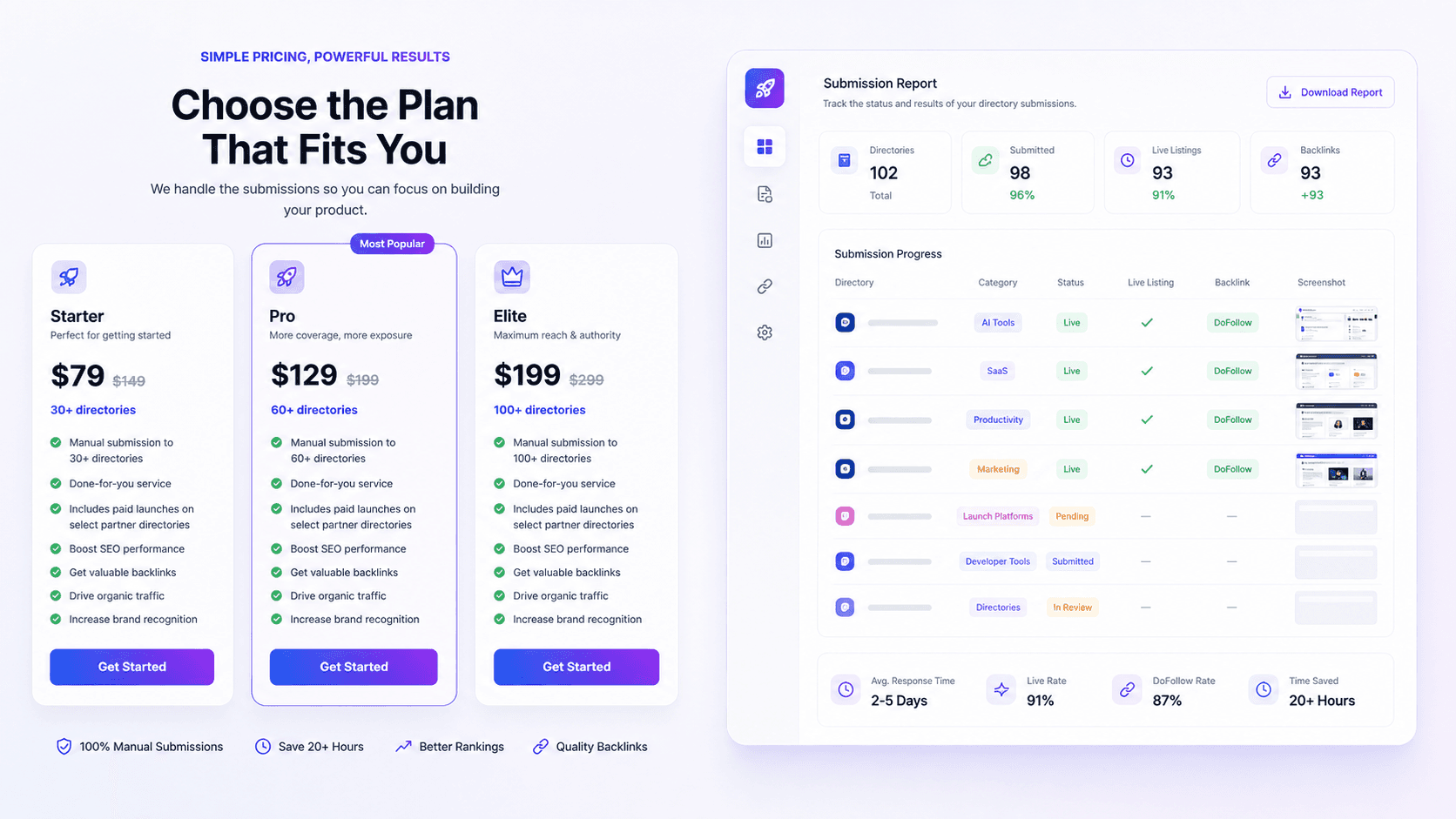
A submission campaign should produce a report. At minimum, track the target directory, URL, category, submitted date, account email, status, live listing URL, and follow-up notes. This sounds operational because it is. Without the report, the work becomes impossible to verify.
The report also helps after launch. You can update old listings, monitor referral traffic, reuse successful directories for a second product, and identify which categories produced approvals. The directory campaign becomes a reusable distribution asset instead of a one-time task.
When directory submission makes sense
Directory submission makes sense when the product page is live, the category is clear, and the founder has enough proof for a public listing. It is less useful when the product is still a vague waitlist, missing screenshots, or changing positioning every week.
Use directory submission as one layer of launch distribution. Combine it with founder outreach, content, communities, customer conversations, changelog posts, and product-led onboarding. It will not replace those channels, but it can give a new product a cleaner public footprint and more places to be discovered.
What to measure after publishing
The work is not finished when an article or listing goes live. Track whether the page is indexed, whether referral sessions appear in analytics, whether branded search impressions move, and whether any directory profile becomes a recurring source of qualified visitors. Early numbers can be small, but the pattern matters. A single relevant listing that sends product-aware visitors is more useful than dozens of low-context mentions.
Review the strongest listings after two to four weeks. Update screenshots if the product changed, add clearer pricing context if visitors bounce, and improve descriptions where category fit feels weak. Directory pages are public assets, not one-time forms. The teams that get the most value from submission work treat listings like small landing pages distributed across the web.
If you use a managed submission service, ask for a report that supports this follow-up. The report should make it easy to identify live URLs, pending reviews, rejected listings, paid upgrade prompts, and founder verification tasks. Without that record, it is hard to separate real distribution from busywork.
How this fits into the broader launch strategy
Directory work should not sit alone. It works best when paired with a product update, founder outreach, customer emails, social proof, community posts, and a landing page that is ready to convert new visitors. The directory listing creates a discovery path; the rest of the launch system turns that attention into trials, demos, feedback, or signups.
Founders should also reuse the language developed during the submission process. A clear short pitch can become social copy. A detailed long description can become a Product Hunt comment, a newsletter blurb, or a comparison-page introduction. Category alternatives can inform SEO pages and paid search tests. The submission kit is valuable because it forces the product story into reusable pieces.
The final goal is consistency without sameness. Your homepage, directory listings, launch posts, and founder outreach should describe the same product, but each surface should emphasize what its audience cares about. That is how directory submission becomes part of a credible launch system rather than a one-off backlink chore.
Ready to build high-quality backlinks?
We'll submit your product to 100+ directories and build valuable backlinks for your SEO. Save hours of manual work so you can focus on building, not submitting forms.
See pricing & get startedPractical checklist
Treat each listing as a public product profile.
Choose directories by category fit and quality.
Track backlink type, live URLs, and follow-up status.
Keep descriptions consistent but adapted per site.
Update important listings when positioning changes.