Key takeaways
The best AI directories are chosen by use case, not by AI buzzwords.
AI listings need trust signals because buyers are skeptical of vague claims.
Broader SaaS and startup directories can support AI products when copy is translated into workflow value.
Screenshots, demo outputs, privacy notes, and pricing details improve listing quality.
Start with the job your AI tool performs
The phrase AI tool is too broad to carry a directory submission by itself. A voice agent, coding assistant, document parser, image generator, sales enrichment tool, and research copilot all belong in different contexts. Before choosing directories, write the concrete job your product performs. Who uses it? What input do they provide? What output do they receive? What workflow becomes faster, cheaper, or more accurate?
This framing helps you choose categories and write listings that do not sound generic. Instead of saying the product is an AI productivity platform, explain that it turns meeting recordings into CRM-ready follow-up notes, audits pull requests for security issues, or extracts structured data from supplier PDFs. Directory visitors need that specificity before they will click.
AI-native directories are only one part of the list
AI directories are valuable because their audience already expects model-powered products. They can understand prompts, agents, copilots, embeddings, workflows, and automation. But if you submit only to AI catalogs, you may miss broader discovery surfaces where buyers search by problem rather than by technology.
A strong AI campaign usually mixes AI-specific directories with SaaS directories, startup launchpads, developer tool lists, productivity catalogs, and niche resource pages. The copy should change across those groups. AI catalogs can receive model context and capability language. Broader directories should receive workflow value, buyer context, pricing, and proof.
Trust signals matter more for AI products
AI products face a higher trust bar because users worry about accuracy, privacy, hallucination, and data handling. A listing that only says powered by AI does not answer those concerns. Add privacy notes, data retention details, model provider context, example outputs, and a clear explanation of where human review fits the workflow.
This does not mean every listing needs a security whitepaper. It means the basics should be visible. If users upload documents, say what happens to them. If the product produces recommendations, show an example. If there is a free trial or usage limit, state it. If the product is best for a specific audience, name that audience instead of claiming it works for everyone.
What makes an AI directory worth submitting to
Evaluate directories by more than domain rating. Look at whether they have active categories, real product pages, crawlable listings, editorial standards, and visitors who match your product. A high-authority site with a weak category match can be less useful than a smaller directory where buyers understand the problem.
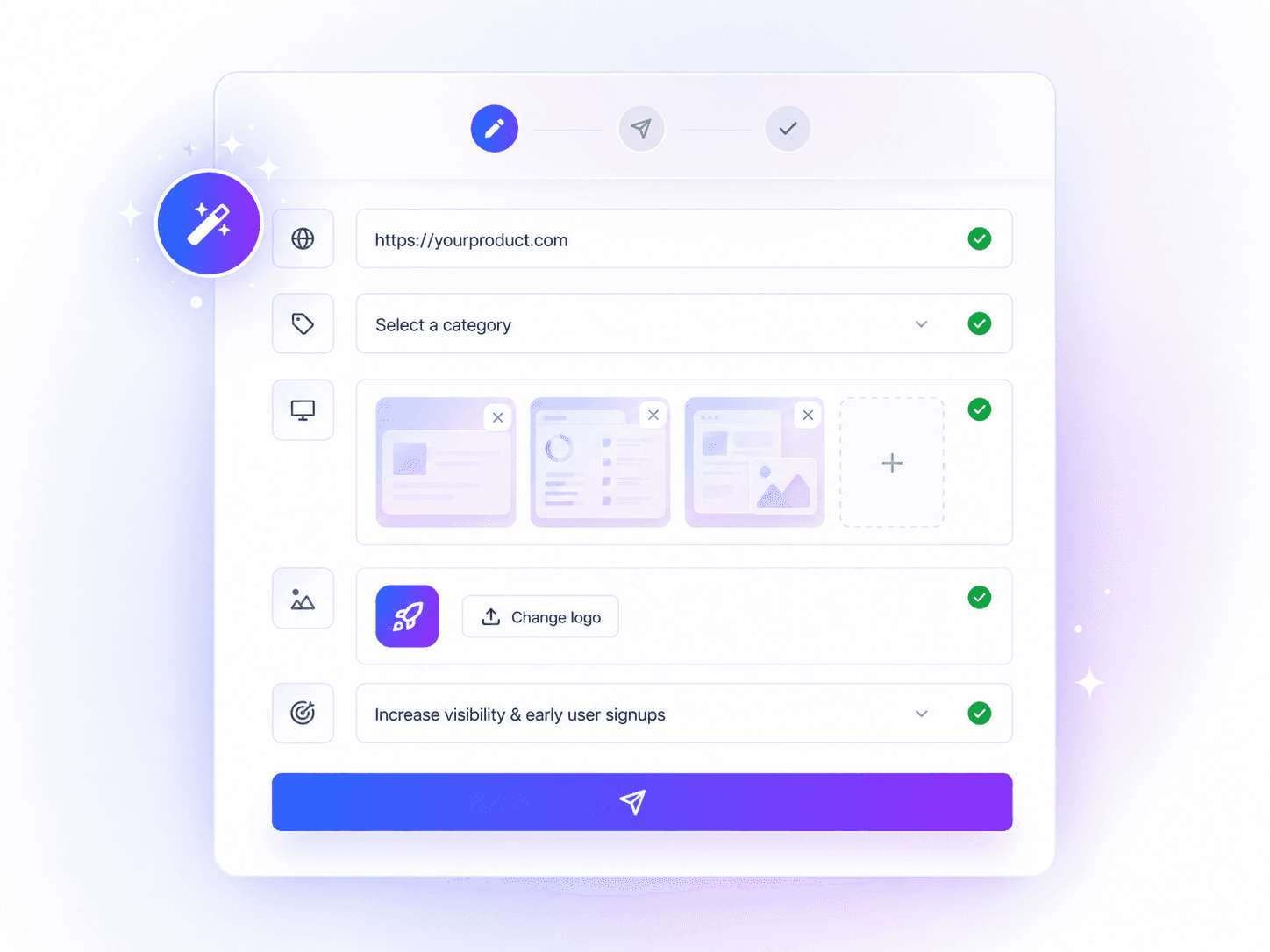
Also inspect the listing format. Can you add screenshots? Can you update the profile later? Does the directory show pricing, tags, alternatives, or use cases? Does it link to the homepage? Is the listing public without login? These details determine whether the listing can become a durable discovery asset or just another forgotten submission.
How to write AI directory copy
Good AI directory copy follows a simple structure: user, task, input, output, proof, and trust. For example, a weak listing says, “AI platform for sales teams.” A stronger listing says, “Helps B2B sales teams turn call recordings and email threads into CRM-ready follow-up notes, next-step summaries, and account risks while keeping source data inside the customer workspace.”
The stronger version gives editors and users something to evaluate. It also gives search engines and AI assistants more context about the category. That context matters because discovery is increasingly shaped by public descriptions across many sites, not only by your own homepage.
Build a blended launch footprint
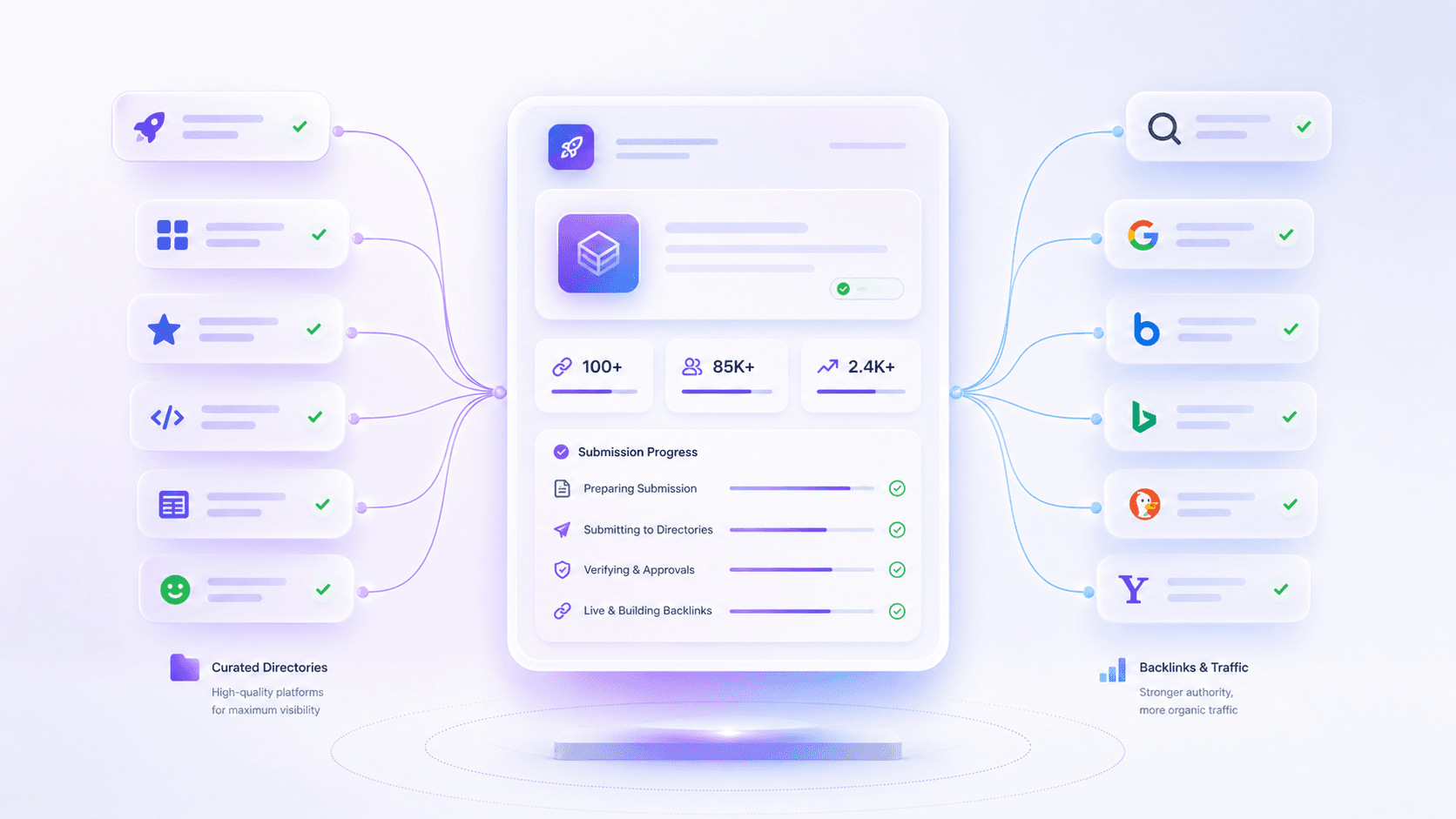
The best directory strategy for AI tools is blended. Use AI directories for category relevance, SaaS directories for buyer discovery, developer directories when the product has technical users, and launch platforms for early traction. Track each group separately so you can see where approvals and referral traffic actually come from.
Over time, update the strongest listings with new screenshots, pricing, positioning, and proof. AI products evolve quickly, and stale listings can misrepresent the product. Treat directory profiles like small landing pages distributed across the web. When they are accurate and specific, they support search, referrals, and credibility.
What to measure after publishing
The work is not finished when an article or listing goes live. Track whether the page is indexed, whether referral sessions appear in analytics, whether branded search impressions move, and whether any directory profile becomes a recurring source of qualified visitors. Early numbers can be small, but the pattern matters. A single relevant listing that sends product-aware visitors is more useful than dozens of low-context mentions.
Review the strongest listings after two to four weeks. Update screenshots if the product changed, add clearer pricing context if visitors bounce, and improve descriptions where category fit feels weak. Directory pages are public assets, not one-time forms. The teams that get the most value from submission work treat listings like small landing pages distributed across the web.
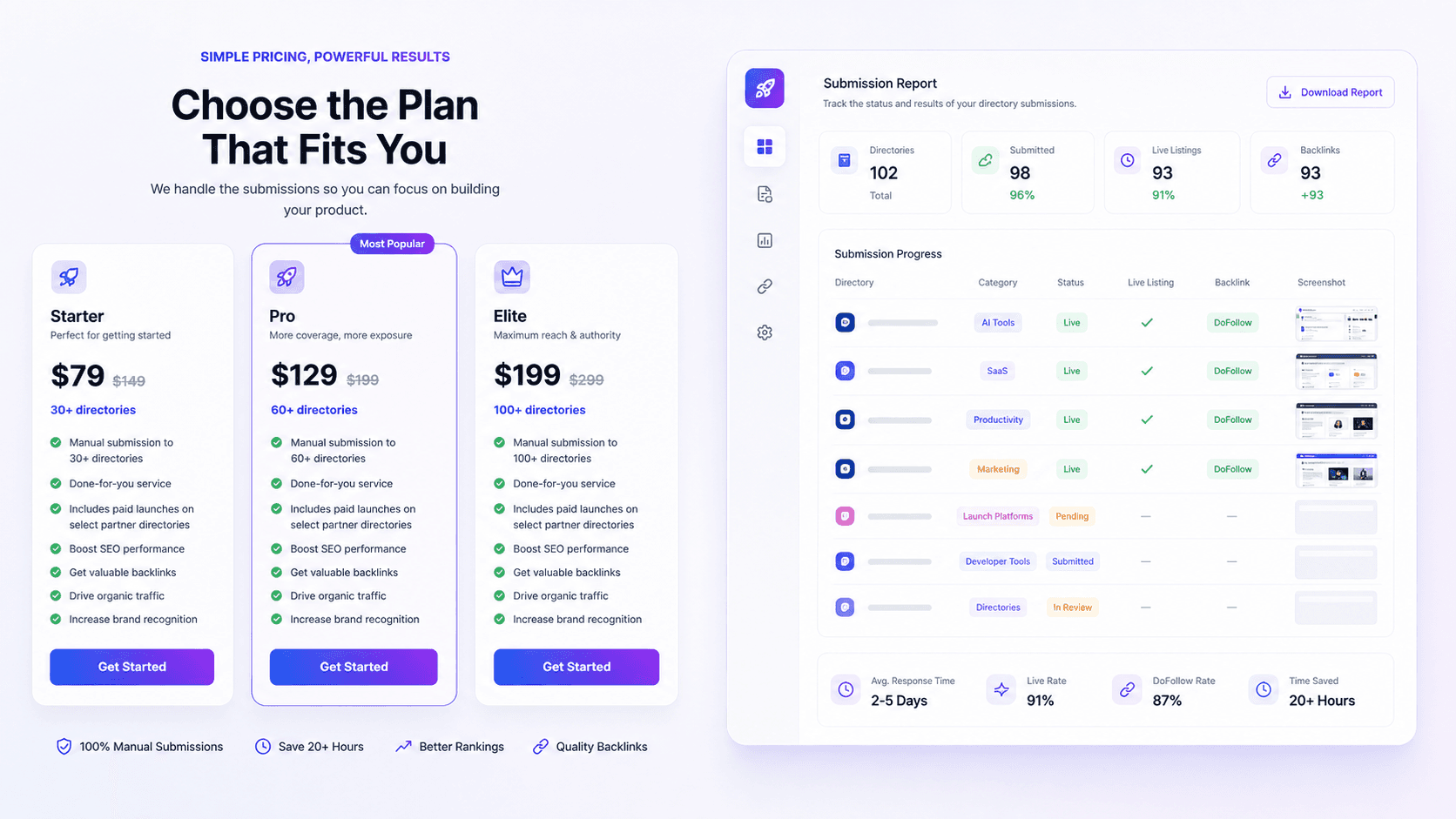
If you use a managed submission service, ask for a report that supports this follow-up. The report should make it easy to identify live URLs, pending reviews, rejected listings, paid upgrade prompts, and founder verification tasks. Without that record, it is hard to separate real distribution from busywork.
How this fits into the broader launch strategy
Directory work should not sit alone. It works best when paired with a product update, founder outreach, customer emails, social proof, community posts, and a landing page that is ready to convert new visitors. The directory listing creates a discovery path; the rest of the launch system turns that attention into trials, demos, feedback, or signups.
Founders should also reuse the language developed during the submission process. A clear short pitch can become social copy. A detailed long description can become a Product Hunt comment, a newsletter blurb, or a comparison-page introduction. Category alternatives can inform SEO pages and paid search tests. The submission kit is valuable because it forces the product story into reusable pieces.
The final goal is consistency without sameness. Your homepage, directory listings, launch posts, and founder outreach should describe the same product, but each surface should emphasize what its audience cares about. That is how directory submission becomes part of a credible launch system rather than a one-off backlink chore.
Ready to build high-quality backlinks?
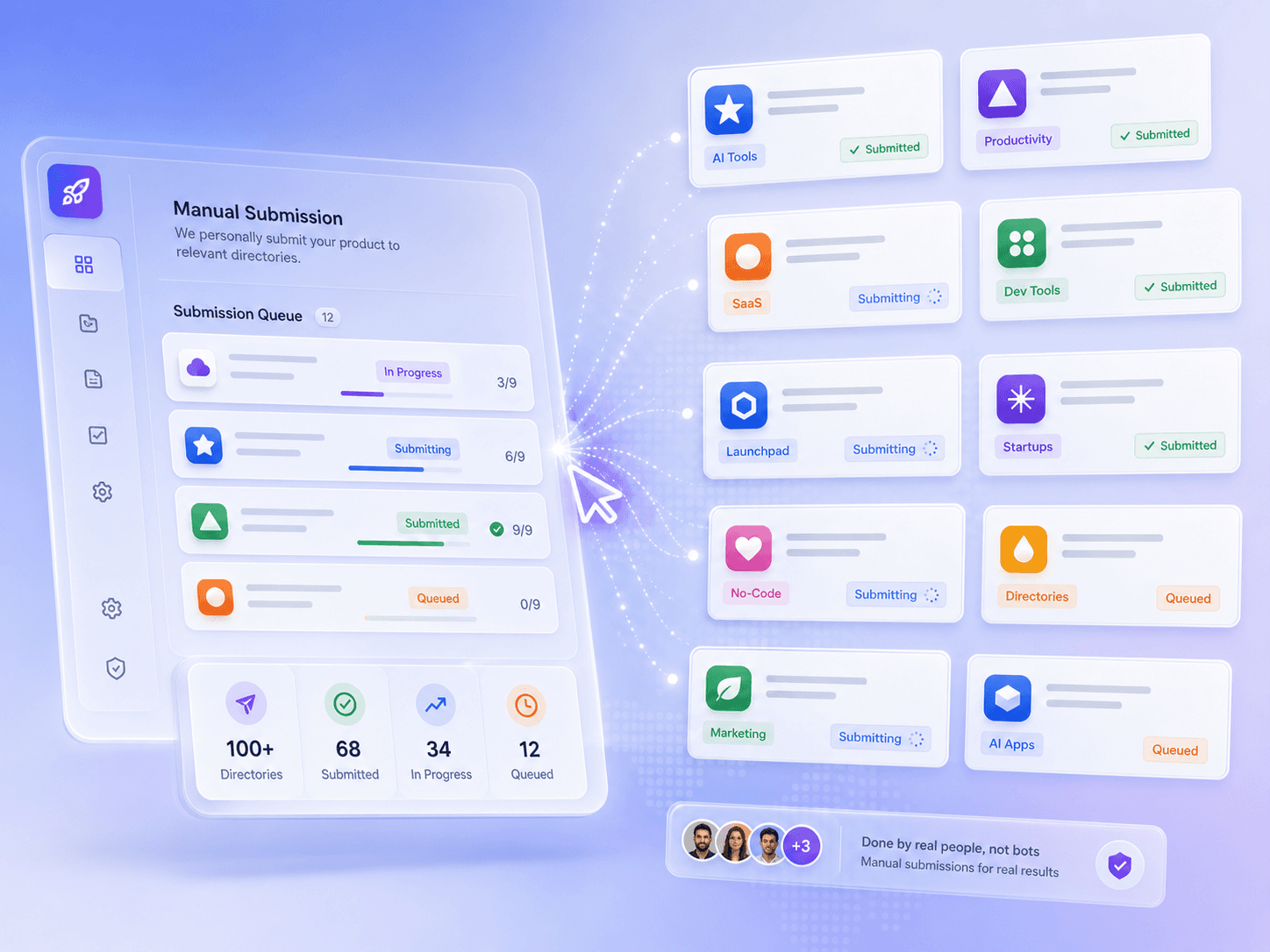
We'll submit your product to 100+ directories and build valuable backlinks for your SEO. Save hours of manual work so you can focus on building, not submitting forms.
See pricing & get startedPractical checklist
Define the exact workflow completed by the AI product.
Prepare privacy, data handling, and model context notes.
Use screenshots or output examples from real workflows.
Adapt copy for AI catalogs, SaaS sites, and launch platforms.
Track which directory categories produce approvals and traffic.