Key takeaways
Create one reusable submission kit before opening any directory form.
Segment directories by audience, link type, pricing, and editorial fit.
Track submitted URLs, live URLs, pending reviews, and founder follow-ups.
Use manual adaptation where it matters instead of pasting identical copy everywhere.
The real problem is not finding directories
Most founders do not get stuck because directories are impossible to find. They get stuck because every directory asks for the same product in a slightly different format. One wants a short pitch, another wants a founder story, another asks for screenshots, and another requires a category that does not quite match your landing page language. After ten forms, the work stops feeling strategic and starts feeling like admin.
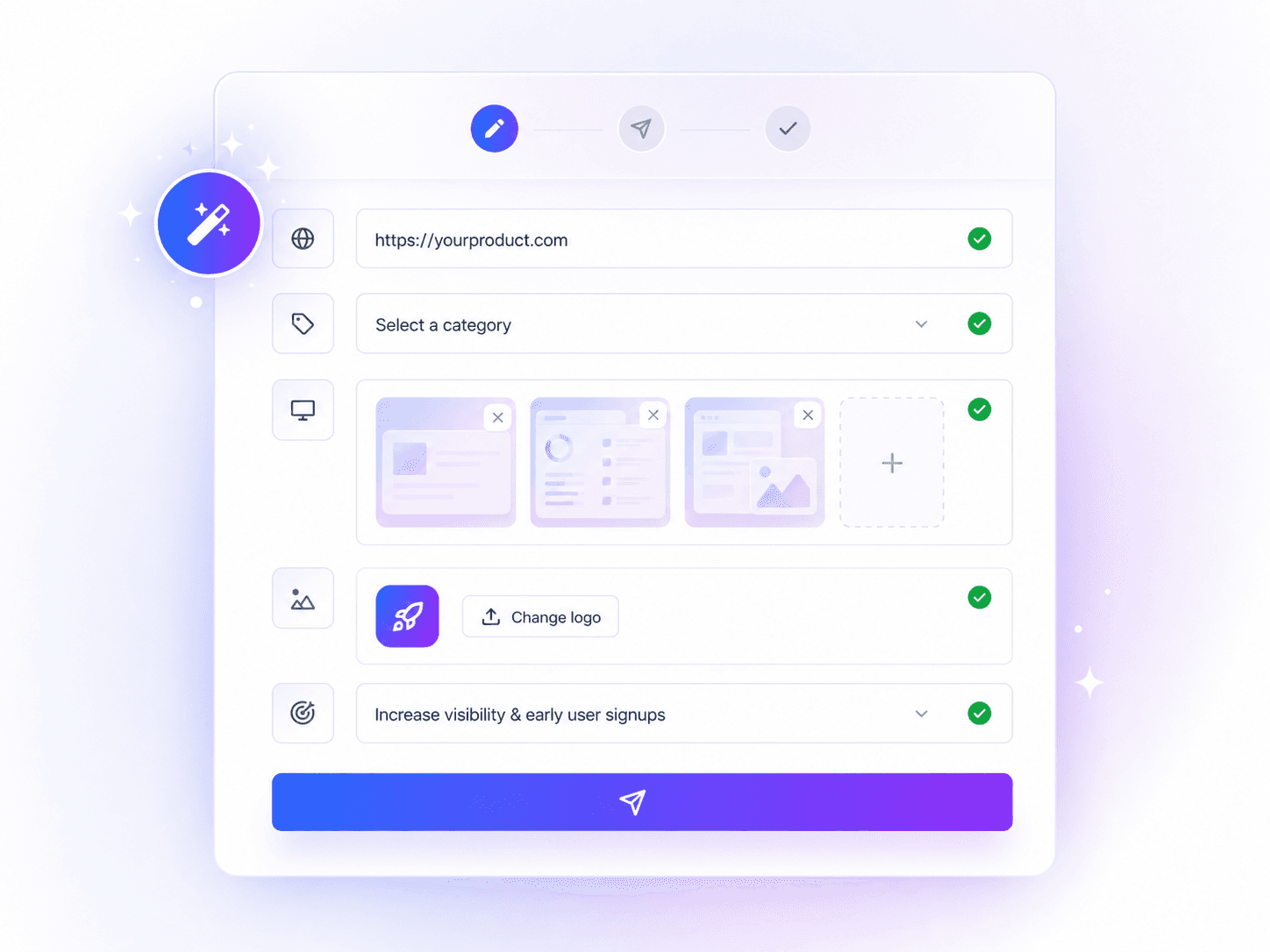
That is why a good submission process starts before the first form. You need a source profile that contains the product name, homepage URL, tagline, short description, long description, target audience, pricing, screenshots, logo, founder details, social links, and category alternatives. This profile becomes the operating system for the campaign. It keeps the product story consistent while still giving you enough raw material to adapt each listing.
Build the submission kit like a launch asset
A submission kit should not be a single paragraph. It should be a set of reusable answers. Write a 120-character tagline, a 300-character summary, a 900-character description, and a longer founder-facing explanation. Prepare two or three category angles, such as AI productivity, SaaS analytics, developer automation, or marketing operations. Add pricing notes, free trial details, and any setup requirements that directory visitors should know.
The kit should also include visual assets. A square logo, a clean product screenshot, a workflow screenshot, and an optional before-after image can prevent a lot of last-minute scrambling. If your product is an AI tool, include a real output example. If it is a developer tool, include a documentation or terminal screenshot. If it is a SaaS product, include a dashboard or reporting view. Directories are easier to approve when the product feels inspectable.
Segment the list before you submit
A random list creates random results. Segment your targets into groups: AI directories, SaaS directories, developer tool directories, startup launchpads, free catalogs, paid directories, and high-authority general software sites. Then sort those groups by relevance, domain authority, traffic, dofollow status, and the likelihood that your product actually belongs there.
This segmentation makes execution faster and cleaner. You can submit the AI version of your copy to AI catalogs, the buyer-focused version to SaaS directories, and the technical version to developer lists. You also avoid wasting time on directories that clearly do not accept your type of product. A smaller relevant set is often more valuable than a larger irrelevant one.
Manual submission still matters
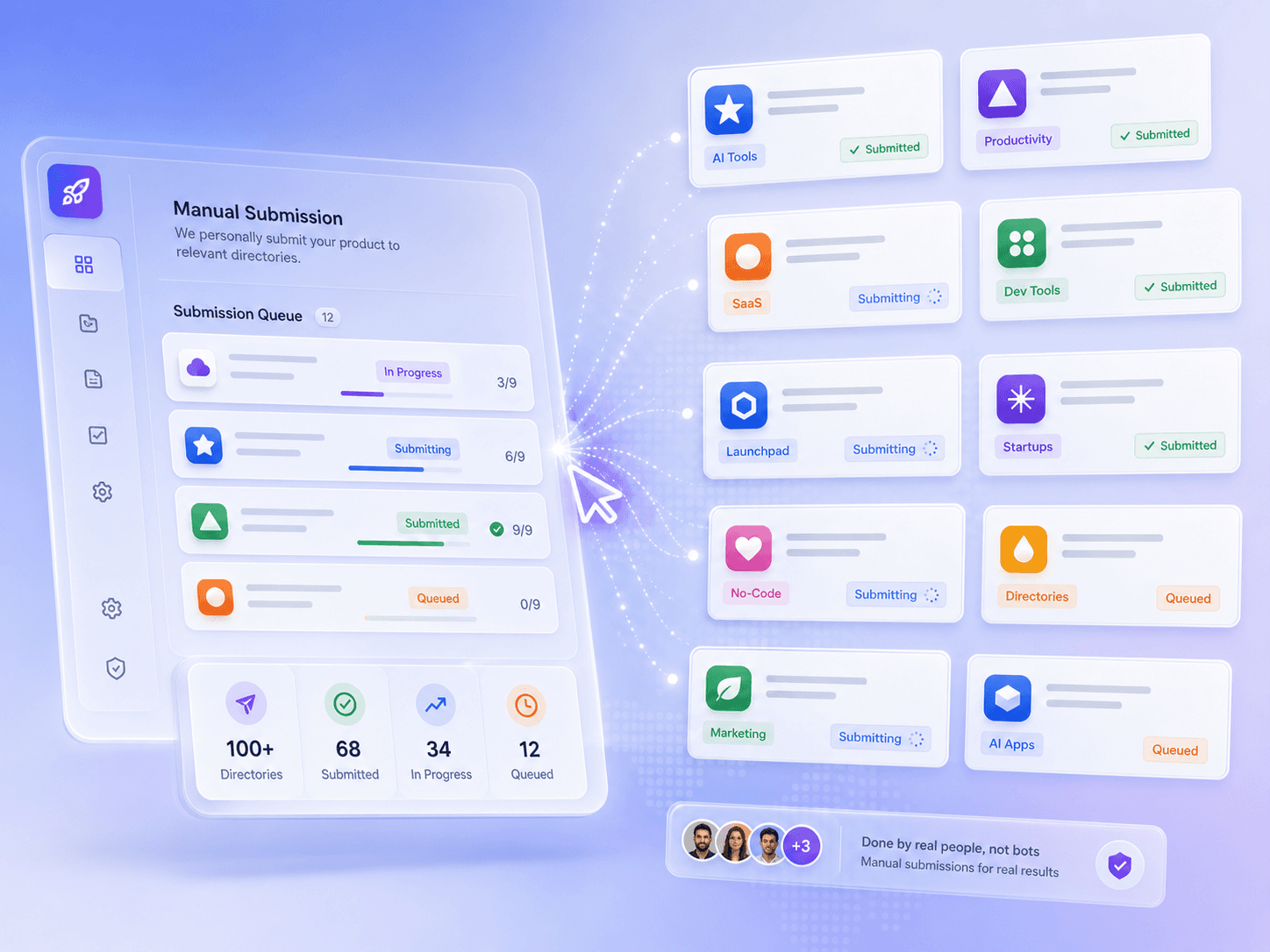
Automation sounds attractive until it damages the listing quality. Many directories have different field limits, category names, editorial standards, and verification flows. A human can decide whether to emphasize time savings, SEO value, technical setup, privacy, pricing, or founder story. That judgment is the difference between a listing that reads like spam and a listing that feels native to the site.
Manual work also helps you avoid duplicate-looking descriptions across the web. You do not need to reinvent the product every time, but you should adapt the first sentence, category language, and proof points. If a directory is focused on startup launches, lead with the launch story. If it is focused on software comparison, lead with the buyer and workflow. If it is focused on AI tools, lead with the use case and trust signals.
The report is part of the product
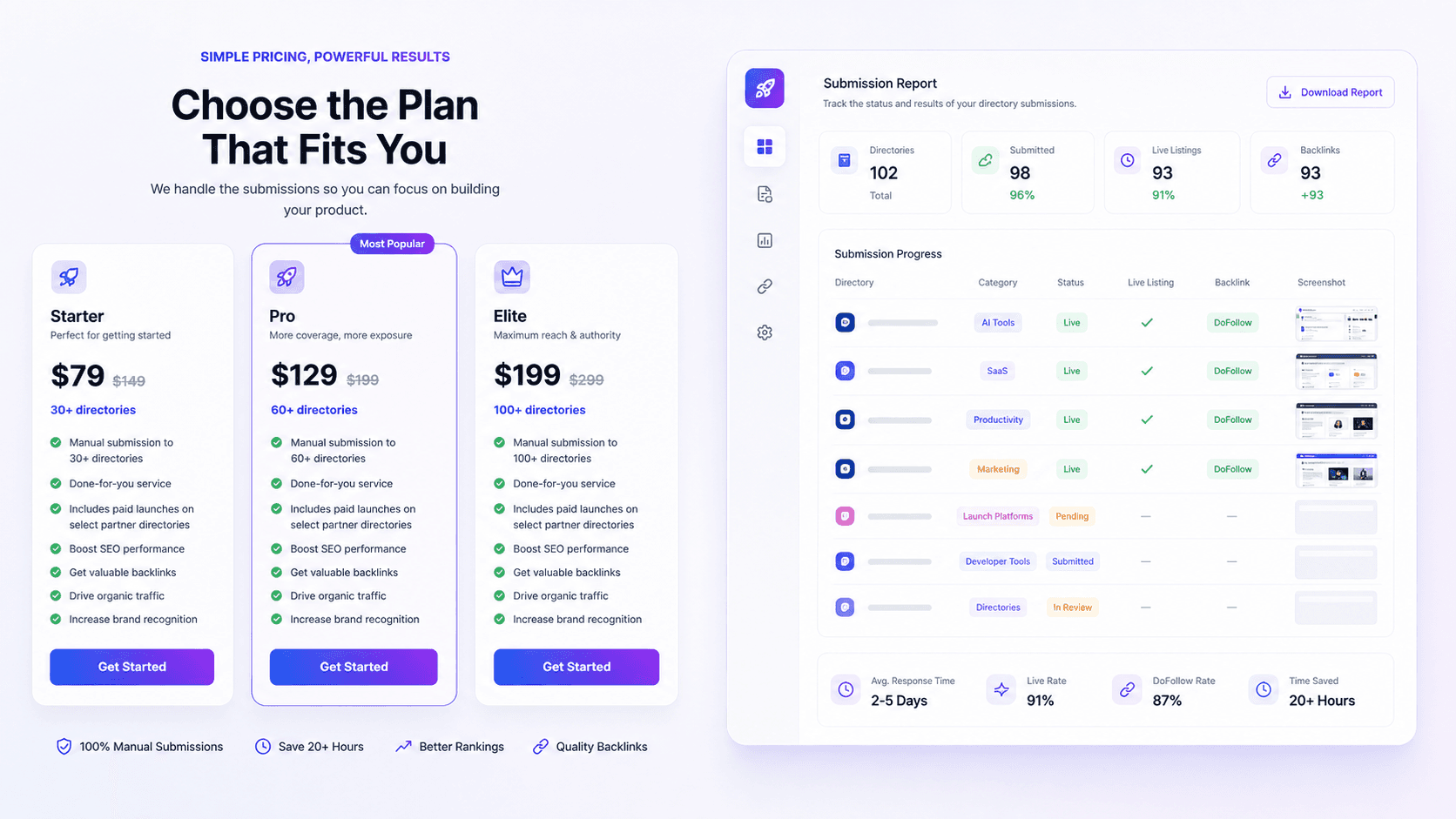
Submitting forms without a report is not a campaign; it is a memory test. Track the directory name, target URL, account email, submitted category, submitted date, status, live listing URL, and follow-up notes. If a directory requires founder verification or a paid upgrade, record it. If a listing is rejected, record the reason when available.
The report becomes useful after launch week. You can check which listings went live, which ones brought referral traffic, which ones need updated screenshots, and which categories produced the best response. For future launches, you already have a proven target set. For SEO and brand tracking, you have a clean record of public mentions instead of a vague claim that someone submitted to a lot of sites.
When to hand the work to a service
You should submit manually if you want full control, have enough time, and are still learning which category fits your product. You should use a service when the product page is ready, the screenshots are clean, and the opportunity cost of doing the work yourself is higher than the fee. The service should not just sell a spreadsheet. It should prepare copy, submit manually, track outcomes, and explain follow-ups.
A strong done-for-you campaign is boring in the best way. You send one brief, the team turns it into directory-ready copy, submits to relevant targets, and returns a report. You still own the product positioning, but you do not lose days to repeated forms, account creation, and status tracking. That is the point: turn launch distribution into a repeatable process instead of a pile of browser tabs.
What to measure after publishing
The work is not finished when an article or listing goes live. Track whether the page is indexed, whether referral sessions appear in analytics, whether branded search impressions move, and whether any directory profile becomes a recurring source of qualified visitors. Early numbers can be small, but the pattern matters. A single relevant listing that sends product-aware visitors is more useful than dozens of low-context mentions.
Review the strongest listings after two to four weeks. Update screenshots if the product changed, add clearer pricing context if visitors bounce, and improve descriptions where category fit feels weak. Directory pages are public assets, not one-time forms. The teams that get the most value from submission work treat listings like small landing pages distributed across the web.
If you use a managed submission service, ask for a report that supports this follow-up. The report should make it easy to identify live URLs, pending reviews, rejected listings, paid upgrade prompts, and founder verification tasks. Without that record, it is hard to separate real distribution from busywork.
How this fits into the broader launch strategy
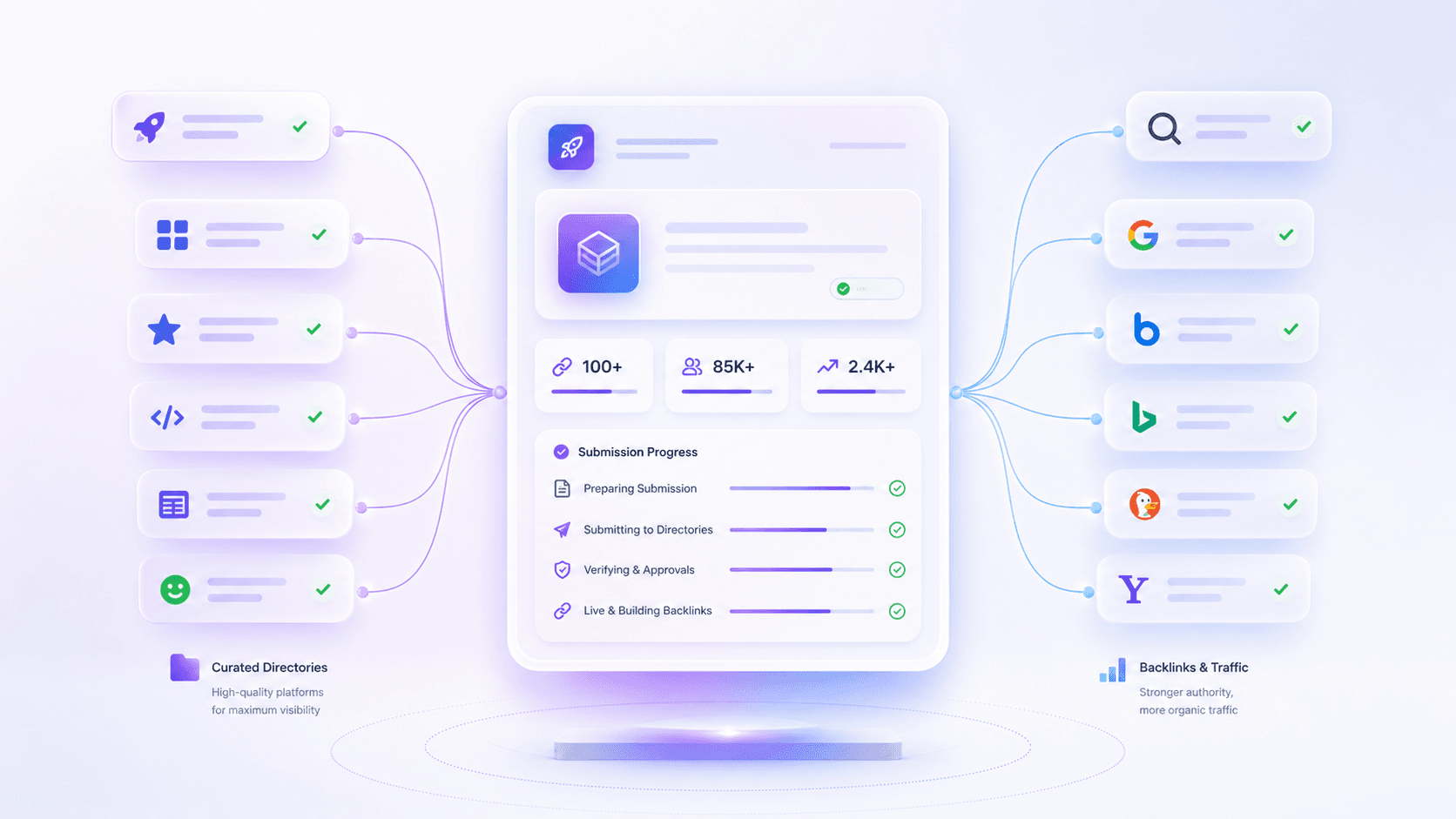
Directory work should not sit alone. It works best when paired with a product update, founder outreach, customer emails, social proof, community posts, and a landing page that is ready to convert new visitors. The directory listing creates a discovery path; the rest of the launch system turns that attention into trials, demos, feedback, or signups.
Founders should also reuse the language developed during the submission process. A clear short pitch can become social copy. A detailed long description can become a Product Hunt comment, a newsletter blurb, or a comparison-page introduction. Category alternatives can inform SEO pages and paid search tests. The submission kit is valuable because it forces the product story into reusable pieces.
The final goal is consistency without sameness. Your homepage, directory listings, launch posts, and founder outreach should describe the same product, but each surface should emphasize what its audience cares about. That is how directory submission becomes part of a credible launch system rather than a one-off backlink chore.
Ready to build high-quality backlinks?
We'll submit your product to 100+ directories and build valuable backlinks for your SEO. Save hours of manual work so you can focus on building, not submitting forms.
See pricing & get startedPractical checklist
Write short, medium, and long descriptions before submitting.
Prepare screenshots for real workflows, not only decorative hero images.
Use category alternatives so each directory gets the right angle.
Track every submitted URL and every live listing URL.
Record founder verification emails and paid upgrade prompts.