Key takeaways
Submission pricing should be compared against founder time and quality of execution.
A low price can be expensive if the work is generic, irrelevant, or undocumented.
Manual adaptation, category selection, and reporting are the real value drivers.
A broad campaign is worth paying for only when the landing page and assets are ready.
Do not price submission work by directory count alone
The easiest way to compare packages is price divided by number of directories. It is also one of the worst ways to judge value. A package that promises hundreds of submissions can still be weak if the targets are irrelevant, the copy is duplicated, the listings are not tracked, or the directories have no editorial quality.
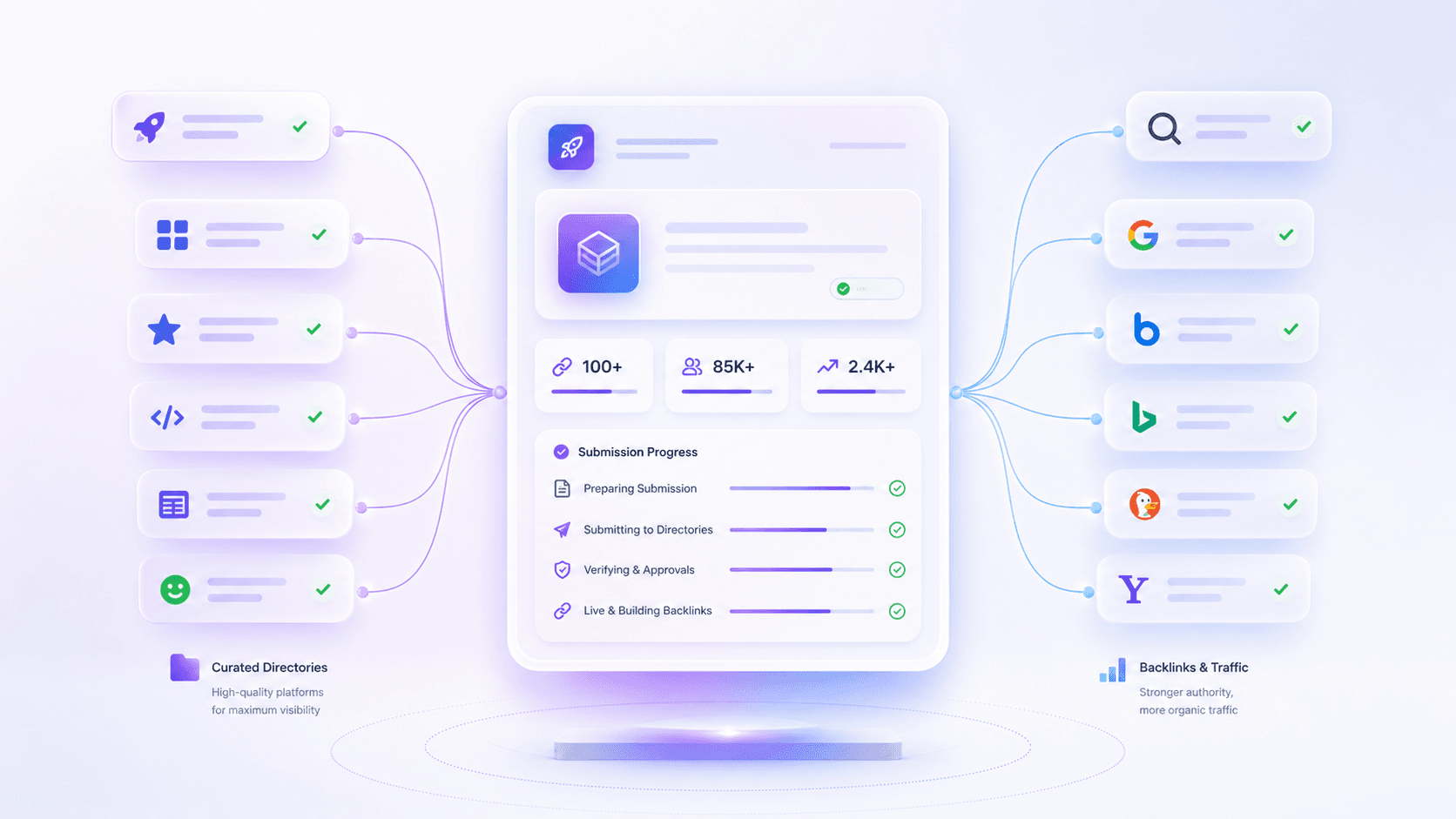
A better pricing question is: what work is actually being done? Researching targets, preparing copy, adapting categories, creating accounts, handling screenshots, submitting forms, tracking verification emails, and producing a report all take time. A service that does those things is selling operations, not just a list.
The hidden cost is founder time
Manual submission looks simple until you do it for a full afternoon. Every directory has different field limits, category names, login flows, image requirements, and review rules. Even a fast founder can spend 10 to 20 minutes per quality target when setup, writing, and tracking are included.
If you submit to 60 or 100 directories, the work can easily consume multiple days. That time competes with product improvements, sales calls, onboarding fixes, and content creation. The fee for a submission service should be weighed against that opportunity cost, not only against the visible labor of filling forms.
What a good package should include
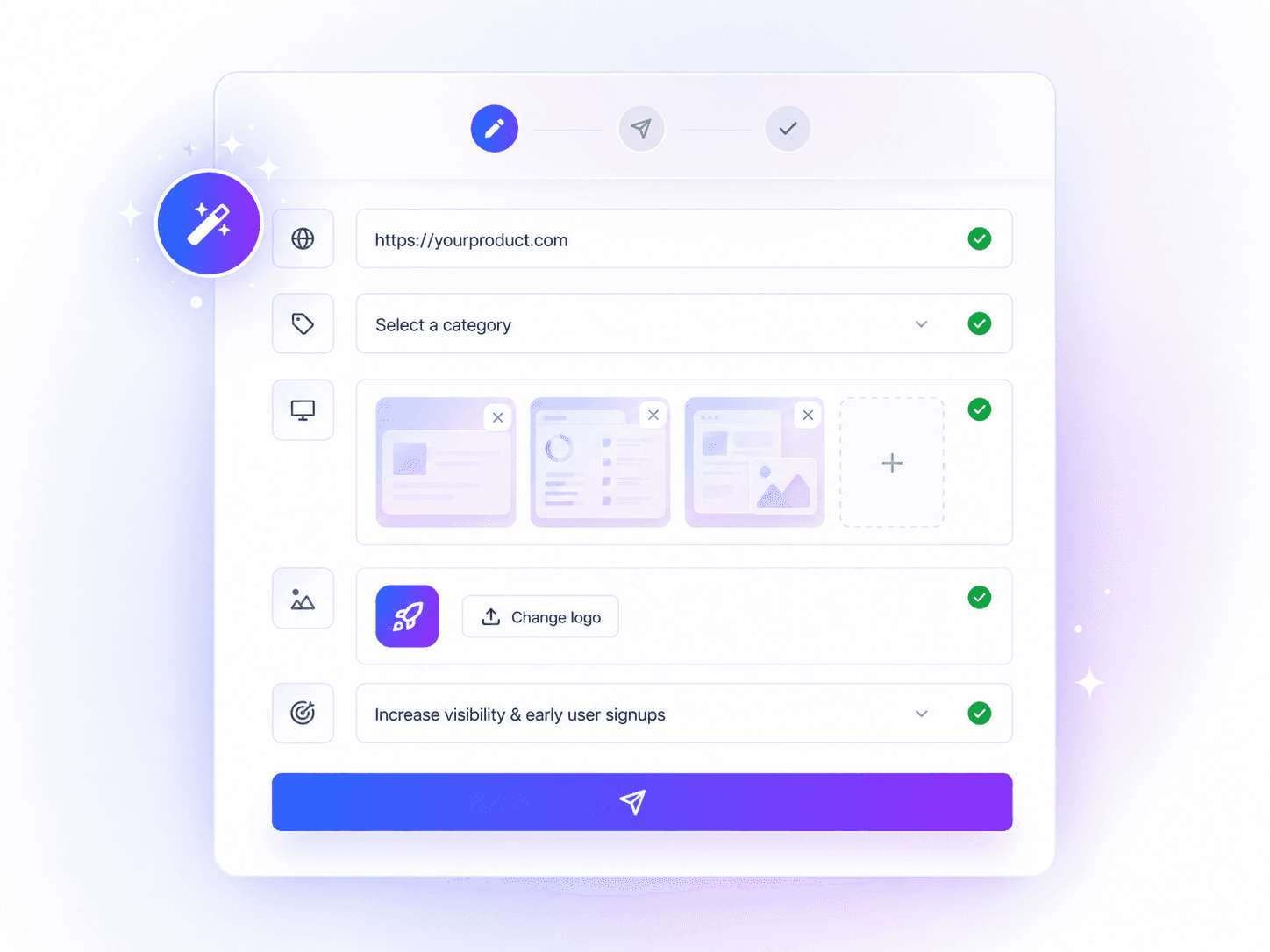
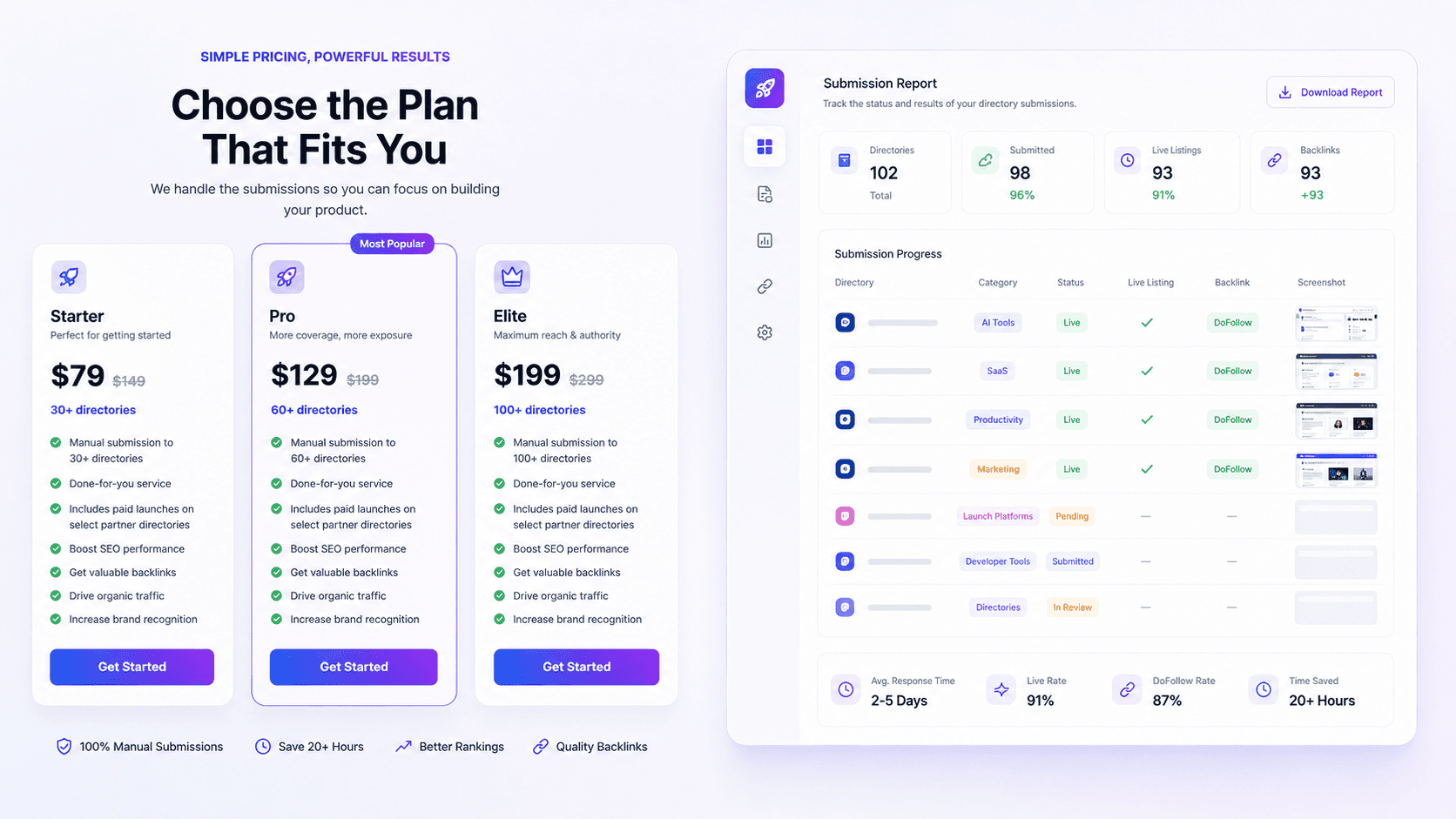
A credible package should include a submission brief, product copy preparation, category mapping, manual submission, and a delivery report. It should also separate free directories from paid directories and explain whether paid placement fees are included or separate. The founder should know what happened after the work is done.
The report is especially important. It should show target directory, submitted date, category, status, live URL when available, and follow-up notes. Without that report, you cannot audit the work or update the listings later. You are left trusting a claim that submissions happened.
When cheap submission services become expensive
Cheap services often cut corners in ways that are hard to see upfront. They may use the same generic description everywhere, submit to directories that do not fit the product, ignore paid upgrade prompts, or provide no meaningful status tracking. The founder saves money but loses visibility into what was actually done.
Low-quality listings can also hurt perception. A vague profile on a public directory may be the first thing a user sees when researching the product. If the description is wrong, the screenshots are missing, or the category is strange, the listing can make the product look less credible.
How to choose the right tier
A smaller package makes sense when the product is early, the positioning is still changing, or the founder wants to validate category fit. A larger package makes sense when the landing page is polished, screenshots are ready, pricing is clear, and the product can handle public inspection.
For many teams, the best approach is to start with the package that matches readiness rather than ambition. Broad coverage is useful when the product story is stable. If the story is not stable, spend time improving the homepage, screenshots, and onboarding before paying for a 100-directory push.
A fair price pays for judgment
The most valuable part of manual submission is not typing. It is judgment: which directories matter, which category fits, what copy should be used, which proof points should be emphasized, and which follow-ups need founder action. That judgment is what separates a useful campaign from form-filling.
When evaluating a submission service, ask for clarity. What is included? What is not included? How are directories selected? What report will you receive? What happens if a directory requires founder verification? Good answers to those questions are often worth more than a lower sticker price.
What to measure after publishing
The work is not finished when an article or listing goes live. Track whether the page is indexed, whether referral sessions appear in analytics, whether branded search impressions move, and whether any directory profile becomes a recurring source of qualified visitors. Early numbers can be small, but the pattern matters. A single relevant listing that sends product-aware visitors is more useful than dozens of low-context mentions.
Review the strongest listings after two to four weeks. Update screenshots if the product changed, add clearer pricing context if visitors bounce, and improve descriptions where category fit feels weak. Directory pages are public assets, not one-time forms. The teams that get the most value from submission work treat listings like small landing pages distributed across the web.
If you use a managed submission service, ask for a report that supports this follow-up. The report should make it easy to identify live URLs, pending reviews, rejected listings, paid upgrade prompts, and founder verification tasks. Without that record, it is hard to separate real distribution from busywork.
How this fits into the broader launch strategy
Directory work should not sit alone. It works best when paired with a product update, founder outreach, customer emails, social proof, community posts, and a landing page that is ready to convert new visitors. The directory listing creates a discovery path; the rest of the launch system turns that attention into trials, demos, feedback, or signups.
Founders should also reuse the language developed during the submission process. A clear short pitch can become social copy. A detailed long description can become a Product Hunt comment, a newsletter blurb, or a comparison-page introduction. Category alternatives can inform SEO pages and paid search tests. The submission kit is valuable because it forces the product story into reusable pieces.
The final goal is consistency without sameness. Your homepage, directory listings, launch posts, and founder outreach should describe the same product, but each surface should emphasize what its audience cares about. That is how directory submission becomes part of a credible launch system rather than a one-off backlink chore.
Ready to build high-quality backlinks?
We'll submit your product to 100+ directories and build valuable backlinks for your SEO. Save hours of manual work so you can focus on building, not submitting forms.
See pricing & get startedPractical checklist
Compare packages by included work, not only directory count.
Confirm whether submissions are manual or automated.
Ask what the final report includes.
Separate free directories from paid placement fees.
Buy broad coverage only when the product page is ready.