Key takeaways
Developer listings need proof: docs, examples, setup notes, and supported platforms.
Generic marketing copy performs poorly with technical audiences.
The best descriptions explain what a developer can build, automate, monitor, or deploy.
Directory reports should track verification and follow-up because developer sites often require extra steps.
Technical buyers scan for proof
Developer tool directories are different from general SaaS directories. Technical buyers want to see documentation, examples, supported languages, setup time, auth model, deployment constraints, and integration details. They are less patient with vague promises.
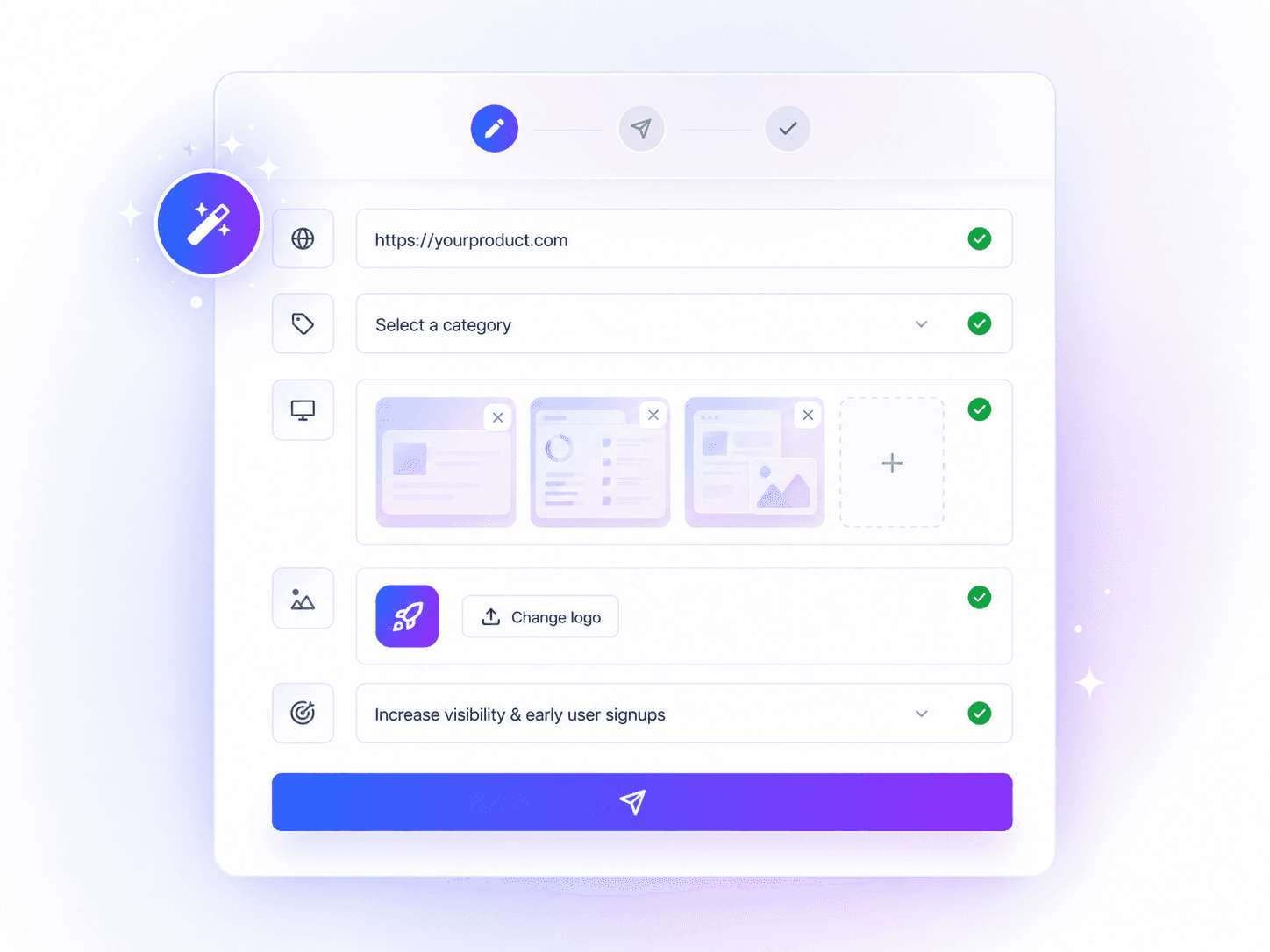
Before submitting, collect the proof assets. Include docs URL, quickstart, API reference, GitHub repository, changelog, SDK links, screenshots, terminal examples, and support channels. These details make the listing credible.
Write around the developer task
A weak listing says the product is a developer productivity platform. A stronger listing says it helps teams monitor API latency, generate SDKs from OpenAPI specs, test webhooks locally, manage feature flags, or sync production data into staging safely.
The task matters because developers evaluate tools by job-to-be-done. What can they build faster? What operational risk is reduced? What manual workflow disappears? Answering those questions makes the listing useful.
Make setup requirements visible
If setup takes five minutes, say so. If the product requires a cloud account, SDK install, API key, Docker container, GitHub app, or browser extension, say so. This information can increase trust because technical users prefer specificity over polished ambiguity.
Pricing limits matter too. Free tier, API call limits, team seats, self-hosted options, and enterprise requirements should be summarized where possible. Hidden constraints can reduce clicks and create poor first impressions.
Choose directory categories precisely
Developer tools often fit precise categories: API monitoring, logging, CI/CD, security, database tooling, observability, SDK generation, testing, documentation, auth, infrastructure, or open-source tooling. Choosing the closest category is not enough if it misrepresents the buyer.
Prepare multiple technical category angles, then choose the one that fits each directory. A product can be infrastructure on one site, observability on another, and developer productivity on a broader startup list.
Expect more follow-up
Developer directories may require verification, GitHub login, docs review, open-source license details, or founder responses. That makes tracking important. Record which accounts were used, what proof was submitted, and which listings need follow-up.
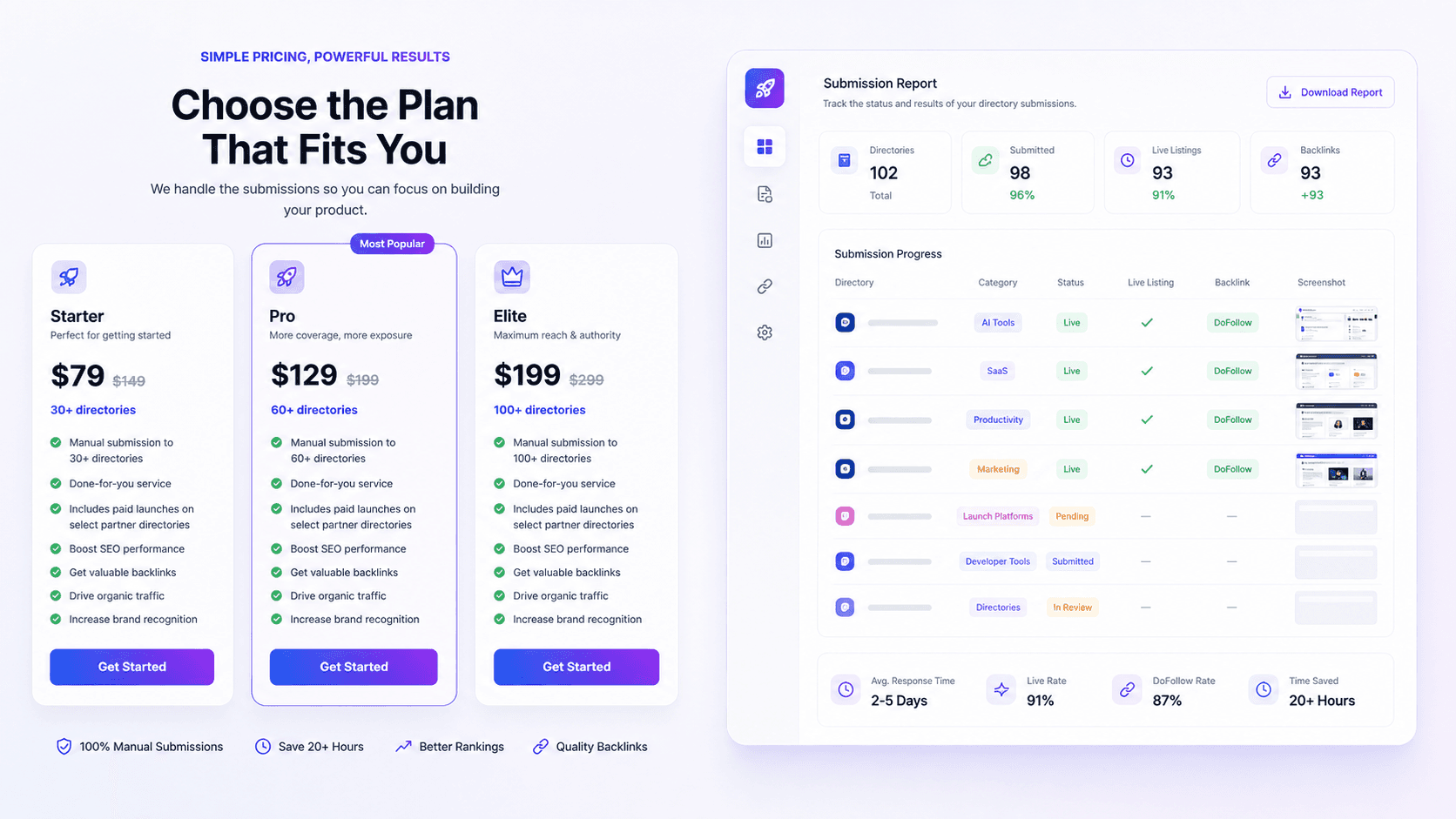
A good developer-tool submission report should be more detailed than a consumer product report. The extra context helps the founder respond quickly when editors ask for clarification.
What to measure after publishing
The work is not finished when an article or listing goes live. Track whether the page is indexed, whether referral sessions appear in analytics, whether branded search impressions move, and whether any directory profile becomes a recurring source of qualified visitors. Early numbers can be small, but the pattern matters. A single relevant listing that sends product-aware visitors is more useful than dozens of low-context mentions.
Review the strongest listings after two to four weeks. Update screenshots if the product changed, add clearer pricing context if visitors bounce, and improve descriptions where category fit feels weak. Directory pages are public assets, not one-time forms. The teams that get the most value from submission work treat listings like small landing pages distributed across the web.
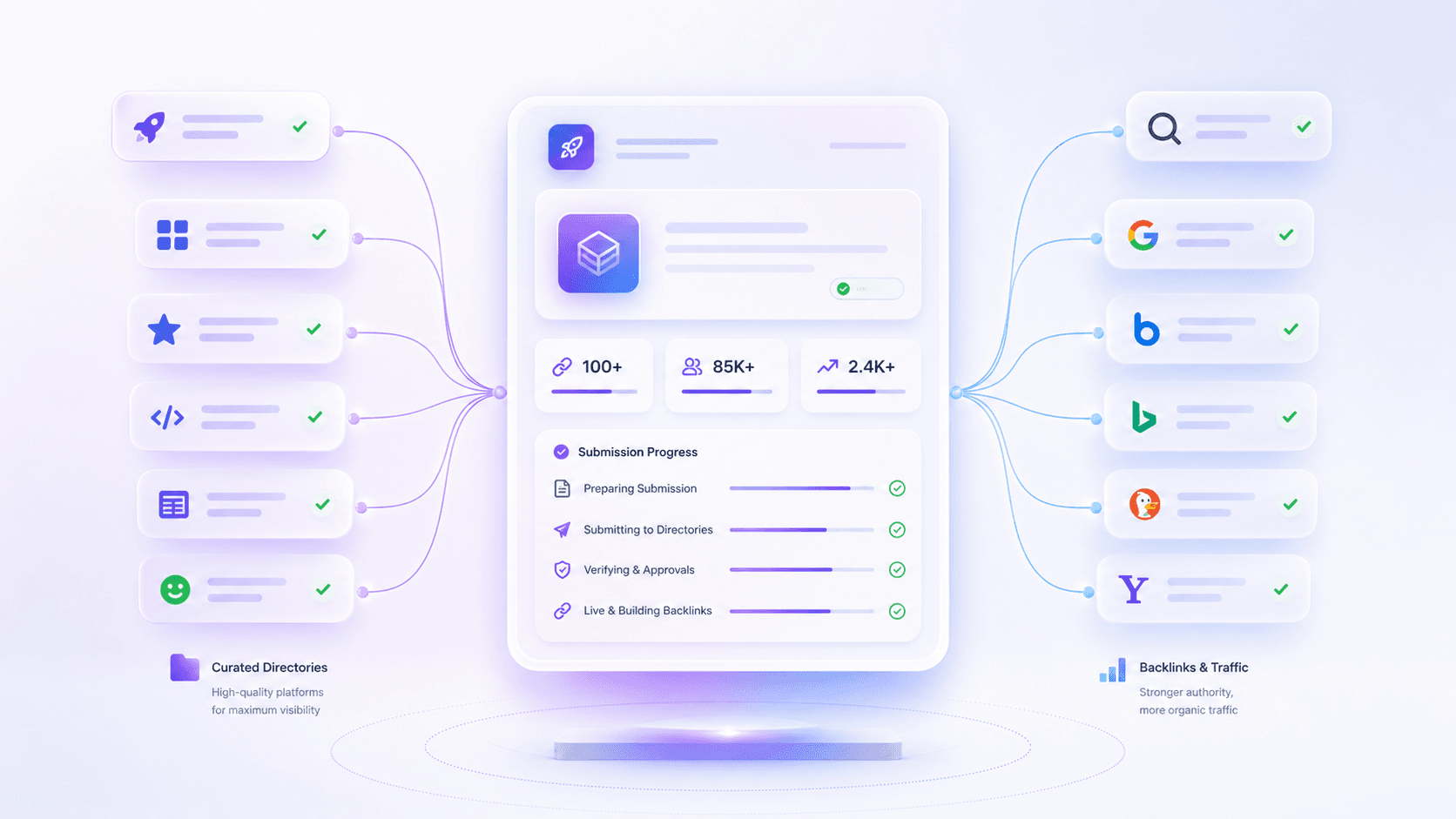
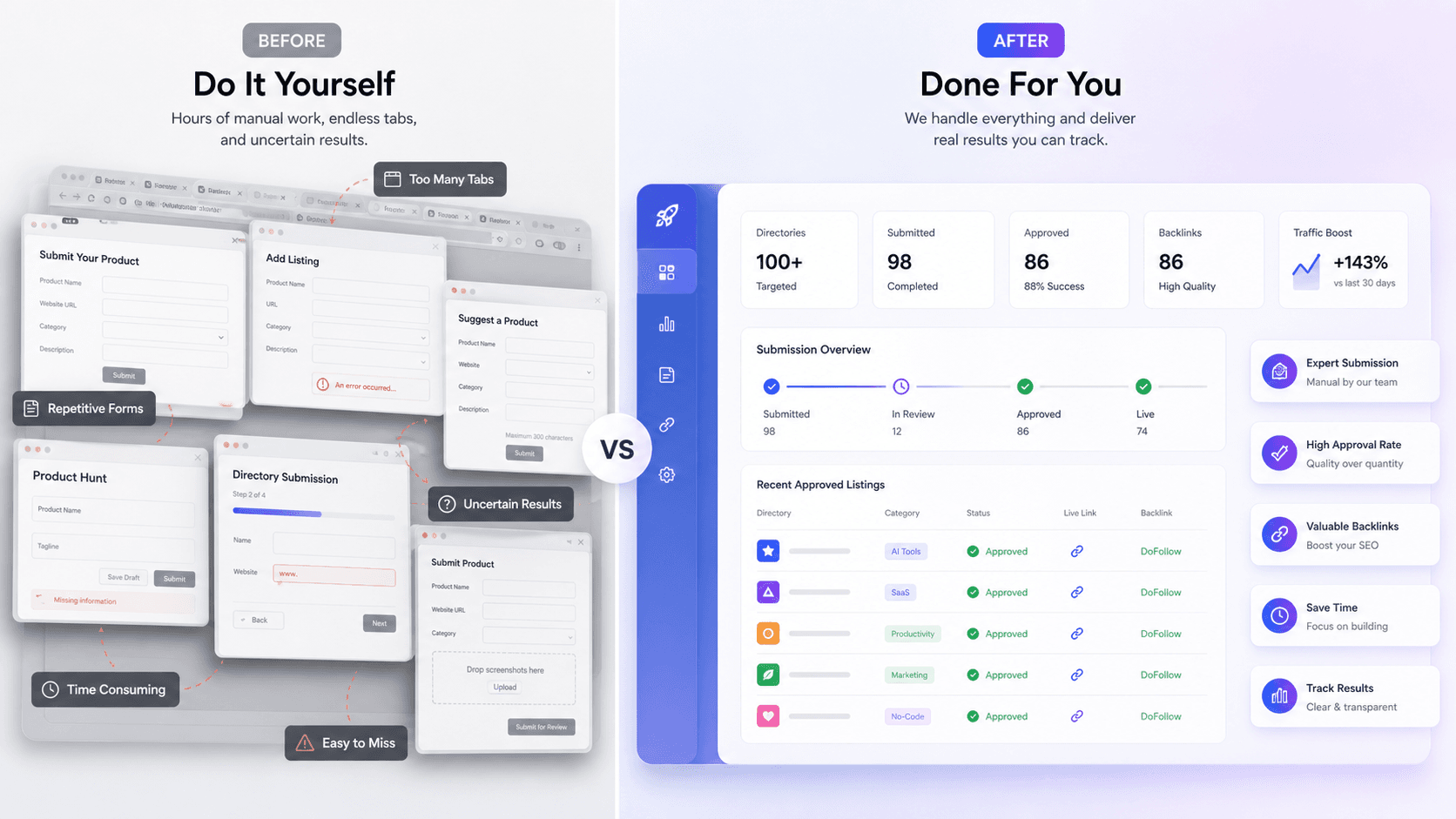
If you use a managed submission service, ask for a report that supports this follow-up. The report should make it easy to identify live URLs, pending reviews, rejected listings, paid upgrade prompts, and founder verification tasks. Without that record, it is hard to separate real distribution from busywork.
How this fits into the broader launch strategy
Directory work should not sit alone. It works best when paired with a product update, founder outreach, customer emails, social proof, community posts, and a landing page that is ready to convert new visitors. The directory listing creates a discovery path; the rest of the launch system turns that attention into trials, demos, feedback, or signups.
Founders should also reuse the language developed during the submission process. A clear short pitch can become social copy. A detailed long description can become a Product Hunt comment, a newsletter blurb, or a comparison-page introduction. Category alternatives can inform SEO pages and paid search tests. The submission kit is valuable because it forces the product story into reusable pieces.
The final goal is consistency without sameness. Your homepage, directory listings, launch posts, and founder outreach should describe the same product, but each surface should emphasize what its audience cares about. That is how directory submission becomes part of a credible launch system rather than a one-off backlink chore.
Ready to build high-quality backlinks?
We'll submit your product to 100+ directories and build valuable backlinks for your SEO. Save hours of manual work so you can focus on building, not submitting forms.
See pricing & get startedPractical checklist
Docs URL, quickstart, and API reference.
Supported languages, platforms, and integrations.
Setup time and authentication model.
Screenshots, terminal examples, or architecture visuals.
Pricing limits and free tier details.